
Omar Yaghi and the 2025 Nobel Prize in Chemistry
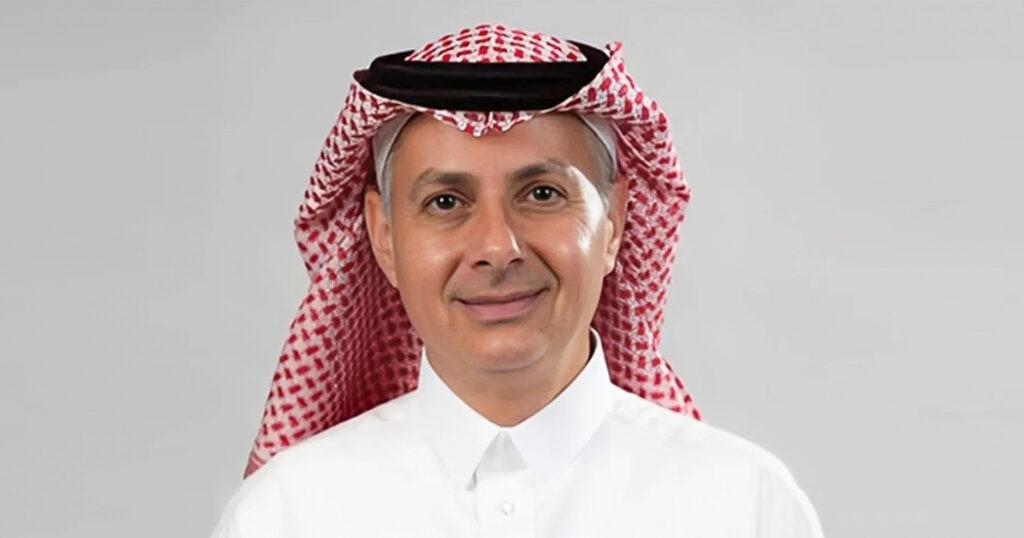
Picture Sourced: https://aawsat.com/
The 2025 Nobel Prize in Chemistry was awarded jointly to Omar M. Yaghi (UC Berkeley, USA), Susumu Kitagawa (Kyoto University, Japan), and Richard Robson (University of Melbourne, Australia; born in the UK) “for the development of metal–organic frameworks (MOFs).” These are crystalline materials built from metal nodes and organic linkers that create vast internal cavities—rooms where chemistry and storage can happen.
What MOFs are (in plain English). Think of MOFs as molecular sponges or LEGO-like scaffolds: their pores give them enormous internal surface area, so they can trap, sort, or react with other molecules. Because scientists can swap building blocks, MOFs are highly tunable—different frameworks do different jobs.
Why it matters. The prize recognizes decades of work that opened a new way to design materials on purpose (“reticular chemistry,” a term popularized by Yaghi). MOFs now number in the tens of thousands, with real and potential uses that touch climate, clean water, and clean energy.
Real-world impacts (selected).
- Water from desert air: Certain MOFs soak up moisture at night and release liquid water with sunlight—enabling off-grid water harvesters.
- Carbon capture & cleaner air: Tailored MOFs selectively grab CO₂ and other pollutants, and some can even help break down “forever chemicals” (PFAS).
- Energy storage & separations: MOFs can pack gases like hydrogen or methane more densely and can act as catalysts or even conductors, useful across energy and chemical manufacturing.
Yaghi was born in Amman, Jordan, to Palestinian parents and later became a U.S. citizen and awarded Saudi citizenship in 2021. He studied in the United States from his teens, earned a PhD at the University of Illinois, and is now a professor at UC Berkeley. His work helped found reticular chemistry and propelled MOFs from clever molecules to platform technology.
Patents & translation to practice. Yaghi’s discoveries have generated dozens of U.S. patents (the Tang Prize organization noted ~60 U.S. patents by 2024). Recent examples include a 2024 U.S. patent on an atmospheric water-harvesting system. He has also co-founded ventures such as Water Harvesting Inc. (WaHa) and Atoco to bring MOF-based water and carbon-capture devices to market.
The bottom line. MOFs give scientists “programmable porosity”—materials whose internal spaces are designed for jobs we care about, from pulling water from air to scrubbing CO₂. That leap—from beautiful structures to useful technology—is why Kitagawa, Robson, and Yaghi’s work earned chemistry’s highest honor in October 2025.